
Top 5 Reasons One Side of Your Arizona Home May Be Sinking
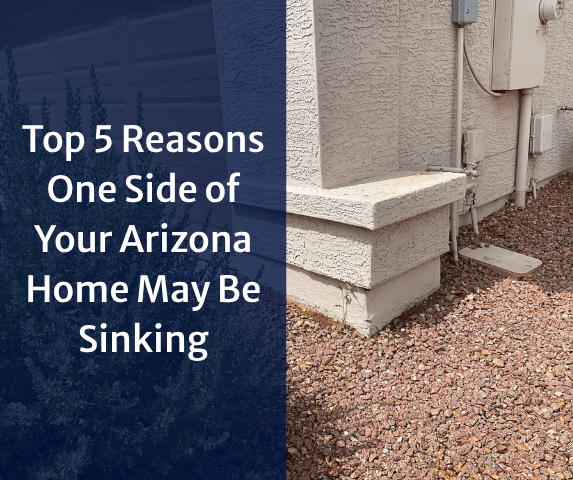
Have you noticed cracks appearing on one side of your home? Maybe a few doors have started sticking, a section of the floor seems to slope, or gaps are developing around windows and walls. When these problems seem concentrated in one area, foundation settlement could be part of the problem.
A home doesn't always settle evenly. One section of the foundation can move more than another, creating what is known as differential settlement. Arizona's soil conditions, drainage patterns, irrigation, and other factors can all influence how the ground beneath a home behaves.
Here are five reasons one side of an Arizona home may begin to sink or settle.
1. Changes in Soil Moisture Around Your Foundation
Even in Arizona's dry climate, the soil surrounding a home doesn't always stay dry.
Irrigation systems, plumbing leaks, roof runoff, drainage problems, and periods of heavy rain can introduce significant amounts of water around a foundation. More importantly, that moisture may not be distributed evenly around the home.
For example, one side of the house may receive regular irrigation from landscaping while another remains relatively dry. Water may also collect near one corner because of the property's grading or drainage.
As soil moisture changes, the soil beneath and around the foundation can change as well. If those changes are more significant in one area, portions of the foundation may experience movement while others remain relatively stable.
This is one reason foundation settlement can appear concentrated in a particular room, corner, or side of a house.
2. Expansive or Unstable Soil
The soil beneath a home plays an important role in supporting its foundation.
Some soils contain clay that changes volume as moisture levels fluctuate. When these soils absorb water, they can expand. As they lose moisture, they can shrink.
Over time, repeated changes in soil conditions can contribute to movement beneath a foundation.
Soil conditions can also vary across a single property. The soil beneath one end of a home may behave differently from soil beneath another area. When the support underneath the foundation isn't consistent, the resulting settlement may not be consistent either.
That's when homeowners may begin noticing problems concentrated on one side of the house.
3. Poor Drainage or Concentrated Water
Water doesn't need to surround the entire house to create a potential problem.
Sometimes the issue is concentrated in one location.
A low spot next to the foundation, improper grading, roof runoff, leaking irrigation lines, or water repeatedly collecting near the same corner can affect the soil in that particular area.
Arizona's monsoon storms can make existing drainage problems especially noticeable. A large amount of rain falling in a short period can produce significant runoff, and water naturally travels toward lower areas of a property.
Homeowners should pay attention to areas where water repeatedly collects near the house after storms or irrigation.
Improving drainage won't necessarily correct foundation movement that has already occurred, but identifying water problems can be an important part of understanding conditions around the home.
4. Poorly Compacted or Variable Fill Soil
Before a home is constructed, portions of the property may be graded or filled to create a suitable building area.
If fill soil beneath part of a foundation isn't sufficiently compacted, it may compress over time under the weight of the structure. Different soil layers or naturally variable soil conditions can also provide different levels of support beneath the house.
The result can be uneven settlement.
Instead of the entire foundation moving downward at the same rate, one section may settle farther than another.
This movement may happen gradually, which means homeowners sometimes don't recognize the problem until visible symptoms begin appearing inside or outside the house.
5. Long-Term Differential Foundation Settlement
Foundation movement isn't always sudden.
In many cases, changes develop gradually over years as soil and moisture conditions beneath the home change.
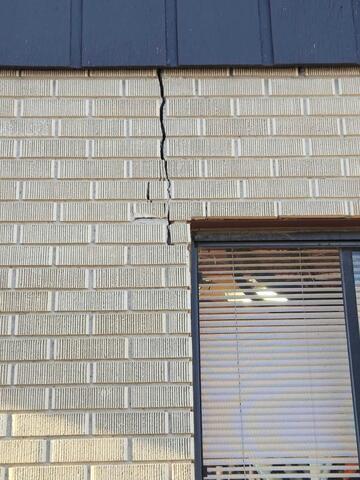
When one section moves differently from another, stress can develop throughout the structure. Eventually, homeowners may begin noticing visible signs that something has changed.
Common warning signs can include:
- Cracks in interior drywall
- Cracks in exterior walls
- Doors or windows that begin sticking
- Gaps around doors or window frames
- Floors that appear uneven or sloped
- Separation between walls, ceilings, or other building components
- Cracks that continue growing or repeatedly return after cosmetic repairs
One symptom alone doesn't necessarily mean a home has a serious foundation problem. Houses can develop cracks and other cosmetic changes for many reasons.
However, when several symptoms appear in the same portion of the house—or seem to become progressively worse—it may be worth having the foundation evaluated.
How Do You Know If Your Foundation Is Actually Sinking?
Looking at cracks alone doesn't always tell the complete story.
A professional foundation inspection considers the overall pattern of the home rather than focusing on a single crack or sticking door. Depending on the situation, this may include examining visible signs of movement and taking elevation measurements throughout the house.
Floor elevation measurements can help identify differences in elevation across the structure and provide additional information about how the foundation is positioned.
This is particularly useful when a homeowner suspects that one corner or side of the house has settled.
The goal is to gather enough information to determine whether the symptoms are consistent with foundation movement and, if so, where that movement appears to be occurring.
Can a Sinking Foundation Be Stabilized?
When foundation settlement requires structural repair, one potential solution is the installation of foundation piers.
Systems such as helical piers and push piers are designed to transfer the weight of the affected portion of the structure to more suitable supporting soils below.
The appropriate repair depends on the home, foundation type, soil conditions, location and extent of settlement, and other site-specific factors. That's why a foundation should be properly evaluated before determining what type of repair is appropriate.
In some situations, a lift may also be attempted as part of the repair process. However, the primary objective of foundation piering is to provide long-term stabilization and help prevent additional settlement in the repaired area.
Don't Ignore Changes on One Side of Your Home
A crack doesn't automatically mean your foundation is failing, and a sticking door doesn't necessarily mean your house is sinking.
The pattern is what matters.
If cracks, uneven floors, sticking doors, gaps, or other changes are appearing primarily on one side of your Arizona home, there may be a reason those symptoms are concentrated in that area.
Arizona Foundation Solutions can evaluate your home's foundation, look for signs of settlement, and help determine whether structural repair is necessary.
If you're concerned that part of your home may be settling, schedule a professional foundation inspection with Arizona Foundation Solutions to get a clearer picture of what's happening beneath your home.