
Can Landscaping and Irrigation Affect Your Arizona Home's Foundation?
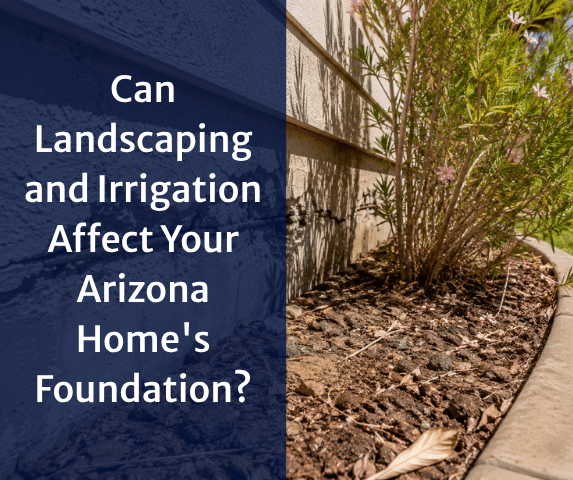
Landscaping can completely change the appearance of an Arizona home. Trees, shrubs, grass, flower beds, and other plants can turn an otherwise bare yard into an inviting outdoor space.
But landscaping also changes how water is introduced and distributed around your property.
When irrigation continually introduces water close to the house, drainage directs water toward the structure, or landscaping changes how moisture behaves around the foundation, problems can develop that aren't always immediately obvious.
Understanding the relationship between landscaping, irrigation, and your foundation can help Arizona homeowners recognize potential warning signs before they become more serious.
Pay Attention to Where Irrigation Water Goes
In Arizona, landscaping often depends heavily on irrigation.
Drip systems and sprinklers allow homeowners to deliver water directly to plants despite our dry conditions. The important question isn't simply whether you're watering your landscaping. It's where that water goes after it leaves the irrigation system.
Water shouldn't continually collect against the foundation.
Irrigation components can also develop leaks or change over time. Emitters can move, sprinkler heads can become misaligned, and landscaping modifications may alter the amount of water being delivered to an area.
A system that worked well when it was originally installed may behave differently years later.
Landscaping Changes Can Affect Conditions Around Your Foundation
Homeowners frequently modify landscaping without thinking about how those changes might affect drainage around the house.
New flower beds may be installed. Rock or soil may be added. Plants may be relocated. Irrigation zones may be expanded.
These changes can alter how water moves around the property.
When modifying landscaping near your house, consider whether the changes encourage water to remain near the foundation or direct it away.
Proper drainage around a home matters because you generally don't want water continually collecting against a concrete stem wall or foundation.
Watch for Irrigation Leaks Near the House
Not every irrigation problem is obvious.
A broken sprinkler can be easy to spot. A slow underground leak may not be.
If one area near your foundation consistently appears wetter than the surrounding landscaping, it deserves attention.
Unexplained plant growth, unusually wet soil, erosion, or water appearing where it normally doesn't may indicate an irrigation issue.
Finding and correcting the source of the water is important, but homeowners should also pay attention to the condition of the nearby foundation.
Look at Your Stem Wall While Maintaining Your Landscaping
Routine yard maintenance provides a convenient opportunity to look at your foundation.
As you trim plants, inspect irrigation lines, or perform other landscaping maintenance, take a moment to look at the exposed concrete around the house.
Watch for changes such as:
-
New foundation cracks
-
Horizontal stem wall cracks
-
Concrete flaking or breaking away
-
Rust-colored staining
-
Exposed reinforcing steel
-
Areas of recurring moisture
-
Cracks that appear to be getting larger
Finding a crack doesn't automatically tell you what's causing it. However, changes in your foundation shouldn't simply be ignored.
Landscaping Can Hide Foundation Problems
Plants positioned immediately against a home can sometimes make foundation problems harder to notice.
Dense shrubs, vines, decorative materials, or other landscaping may block your view of the exposed stem wall.
By the time the landscaping is trimmed or removed, a crack may have progressed considerably.
Keeping enough access to periodically view the exposed foundation makes it easier to recognize changes.
This is particularly useful with stem wall damage, where horizontal cracking, concrete spalling, or rust staining may indicate deterioration that deserves further evaluation.
Sprinklers Deserve Special Attention
Sprinklers repeatedly spraying directly against a stem wall can present another concern.
Over time, repeated moisture exposure can contribute to conditions that allow reinforcing steel inside the concrete to corrode. As corrosion progresses, expansion around the steel can contribute to cracking and concrete spalling.
Because that process deserves a closer look of its own, we've covered sprinkler-related stem wall damage and rebar corrosion separately.
The important takeaway for landscaping maintenance is simple: irrigation should be maintained so water goes where it's intended rather than continually against your house.
Seeing Foundation or Stem Wall Cracks?
Landscaping and irrigation are only pieces of a much larger picture. Foundation cracks and movement can have many potential causes, and seeing a crack doesn't mean you can determine the cause simply by looking at your yard.
That's where a professional foundation inspection can help.
If you're seeing foundation cracks, stem wall cracks, concrete spalling, or other signs of foundation damage, Arizona Foundation Solutions can evaluate the affected areas and help determine whether foundation or stem wall repair is needed.
Schedule a foundation inspection with Arizona Foundation Solutions to better understand what's happening around your Arizona home.