
Why Covering Up Stem Wall Damage Can Cost Arizona Homeowners Thousands
Why Covering Up Stem Wall Damage Can Cost Arizona Homeowners Thousands
5 Minute Read
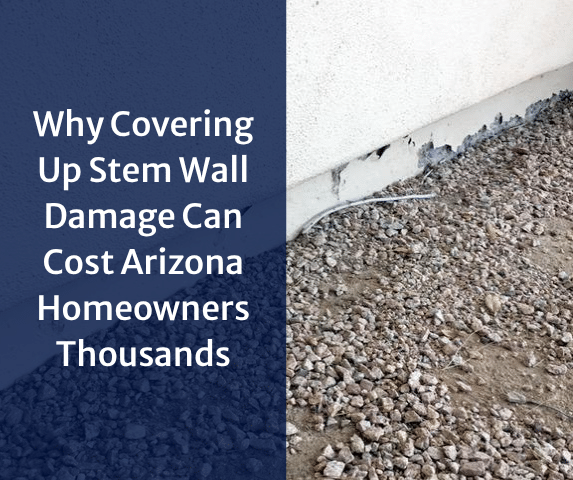
If you've noticed peeling paint, cracked coatings, rust stains, or crumbling concrete along the bottom of your home's exterior walls, it can be tempting to apply a fresh coat of paint or install a cosmetic cover to make the problem disappear. Unfortunately, many Arizona homeowners learn the hard way that these "band-aid" stem wall repairs don't solve the underlying issue—they simply hide it until the damage becomes much more severe and expensive.
In fact, some of the worst stem wall failures we inspect began as minor cosmetic concerns that were covered up instead of properly repaired.
What Is a Stem Wall?
A stem wall is the portion of your home's foundation that extends above the soil and supports the structure above. In many Arizona homes, especially those built from the 1970s through the early 2000s, the stem wall contains reinforcing steel (rebar) embedded within the concrete.
When moisture penetrates the concrete and reaches the rebar, the steel begins to rust. As rust forms, it expands significantly, creating internal pressure within the concrete. This process is commonly known as stem wall deterioration, stem wall spalling, or rebar corrosion.
Over time, the expanding rust causes:
-
Horizontal cracks
-
Flaking concrete
-
Delaminated coatings
-
Exposed rebar
-
Structural weakening of the foundation
The Problem With Band-Aid Stem Wall Repairs
Many homeowners discover early signs of deterioration and choose one of the following cosmetic solutions:
-
Painting over damaged concrete
-
Applying stucco patch material
-
Covering the area with trim or flashing
-
Installing decorative metal plates
-
Using caulk to fill visible cracks
While these repairs may temporarily improve appearance, they do not stop corrosion.
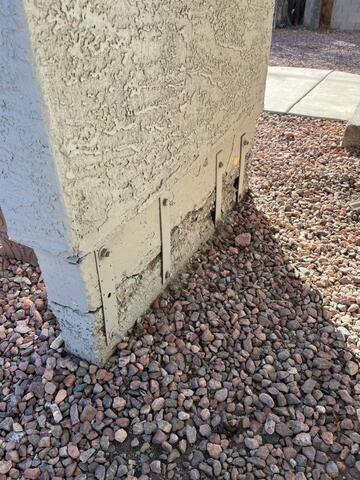
The problem continues to develop behind the cosmetic repair where it cannot be seen.
Example #1: Decorative Cover Plates
One of the photos above shows metal plates installed over a deteriorated stem wall. While the repair may look clean initially, the steel reinforcement inside the concrete continues to corrode if the damaged material isn't removed.
As rust expands beneath the surface, deterioration spreads beyond the covered area. By the time visible damage reappears, the affected section is often much larger than the original problem.
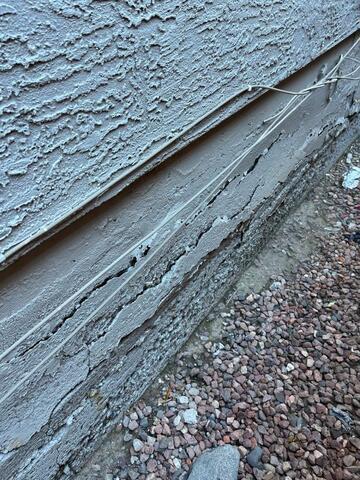
Example #2: Painting Over Damage
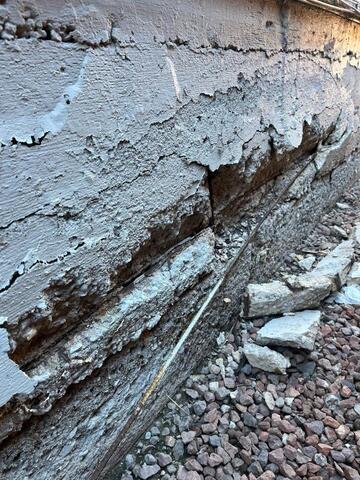
Several of the photos show areas where previous coatings and paint were applied over deteriorating concrete.
Fresh paint may temporarily hide cracking and discoloration, but paint cannot stop corrosion. Moisture remains trapped within the concrete while the rebar continues to expand.
Eventually homeowners begin noticing:
-
Bubbling paint
-
Cracking coatings
-
Hollow sounding concrete
-
Pieces of concrete breaking away
At that point, the deterioration has usually advanced significantly beyond what is visible from the surface.
Why Stem Wall Damage Is So Common in Arizona
Arizona's climate creates ideal conditions for stem wall deterioration.
Many homeowners assume that because Arizona is dry, moisture-related foundation problems are uncommon. However, stem walls are frequently exposed to moisture from:
-
Irrigation systems
-
Landscape watering
-
Sprinkler overspray
-
Monsoon storms
-
Poor drainage
-
Decorative rock retaining moisture against the foundation
When moisture repeatedly penetrates the concrete, corrosion begins around the reinforcing steel.
Over decades, even small amounts of moisture exposure can lead to significant stem wall damage.
As a result, stem wall repair is one of the most common foundation repair services for older homes in Phoenix, Tucson, Mesa, and communities throughout Arizona.
What Happens When Damage Is Ignored?
When stem wall deterioration progresses unchecked, several problems can occur:
Increased Repair Costs
Minor deterioration is generally less expensive to repair than widespread damage.
When cosmetic repairs hide the problem for years, larger sections of concrete often need to be removed and reconstructed.
Reduced Structural Integrity
The purpose of reinforcing steel is to strengthen the foundation.
As corrosion consumes the steel, the stem wall loses structural capacity.
Decreased Home Value
Visible stem wall damage often raises concerns during real estate transactions.
Home inspections frequently identify:
-
Horizontal stem wall cracks
-
Spalling concrete
-
Exposed rebar
-
Previous cosmetic repairs
Buyers often request repairs or credits before closing.
Continued Deterioration
Unlike some cosmetic issues, stem wall corrosion does not stop on its own.
Without proper treatment, deterioration generally continues to spread.
What Does Proper Stem Wall Repair Look Like?
A professional stem wall repair addresses the root cause rather than covering up symptoms.
The process typically includes:
1. Removing Deteriorated Concrete
All damaged concrete must be removed until sound material is reached.
2. Exposing and Cleaning Rebar
Corroded reinforcing steel is either removed or cleaned to remove rust.
3. Replacing Severely Damaged Steel
If rebar has lost significant material, additional reinforcement may be installed. Using Composite Carbon Fiber rebar will ensure oxidation will never happen again.
4. Applying Corrosion Protection
Protective coatings help reduce future corrosion.
5. Rebuilding the Stem Wall
Structural repair materials are used to restore the damaged section.
6. Protective Finish Coating
The repaired area is sealed and coated to help protect against future moisture intrusion.
When completed correctly, a stem wall repair restores both the appearance and structural integrity of the foundation.
Warning Signs You Shouldn't Ignore
Consider scheduling a professional stem wall inspection if you notice:
-
Horizontal cracks near ground level
-
Rust stains on foundation walls
-
Bubbling or peeling paint
-
Concrete flaking or crumbling
-
Exposed rebar
-
Previous patch repairs failing
-
Areas covered by metal flashing or decorative panels
-
Stucco cracking near the bottom of exterior walls
These symptoms often indicate active corrosion beneath the surface.
The Bottom Line
Band-aid repairs may temporarily improve the appearance of a damaged stem wall, but they rarely solve the underlying problem. Covering deterioration with paint, patches, trim, or decorative plates allows corrosion to continue unchecked, often resulting in larger repairs and higher costs later.
The photos above illustrate a common progression: visible damage is covered up, corrosion continues behind the scenes, and eventually the stem wall deteriorates far beyond the original affected area.
If you've noticed cracks, rust staining, flaking concrete, or exposed rebar, don't wait for the damage to worsen. Contact AZFS today to schedule a free, no-obligation stem wall inspection. Our Foundation Repair specialists will evaluate your home's condition, explain your repair options, and provide a customized solution designed to protect your home for years to come. Ready to get started? Schedule your free inspection with AZFS.
Ignoring the problem doesn't make it go away—it simply gives corrosion more time to spread.